Quiz: Identify 2 millets in 2 images

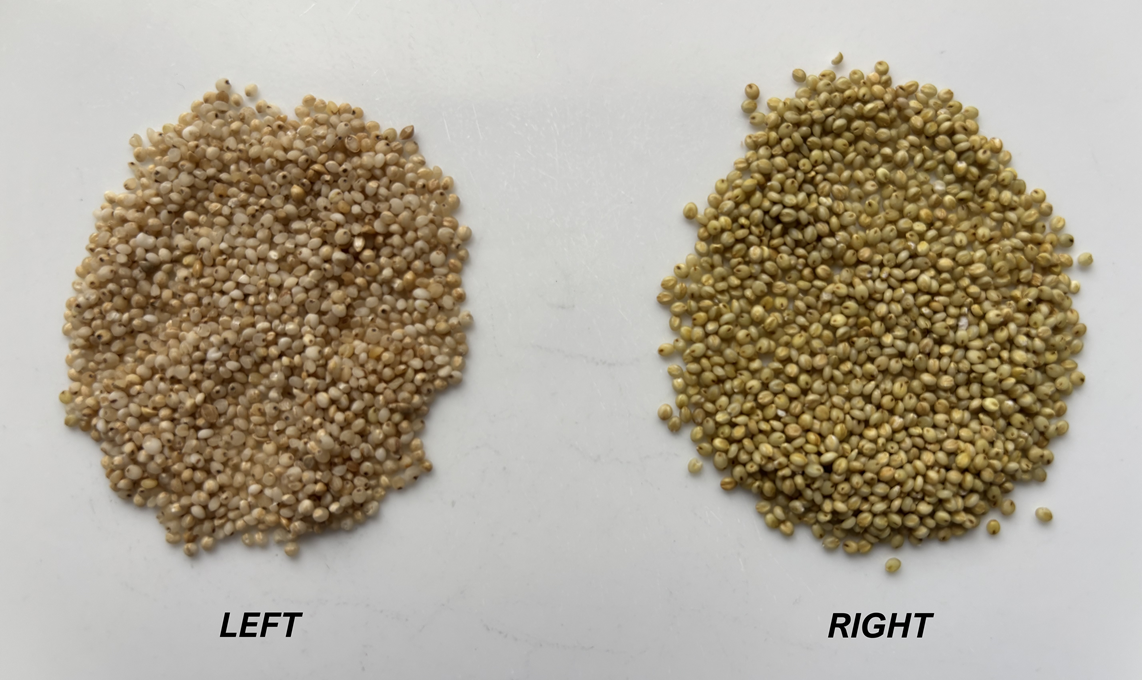
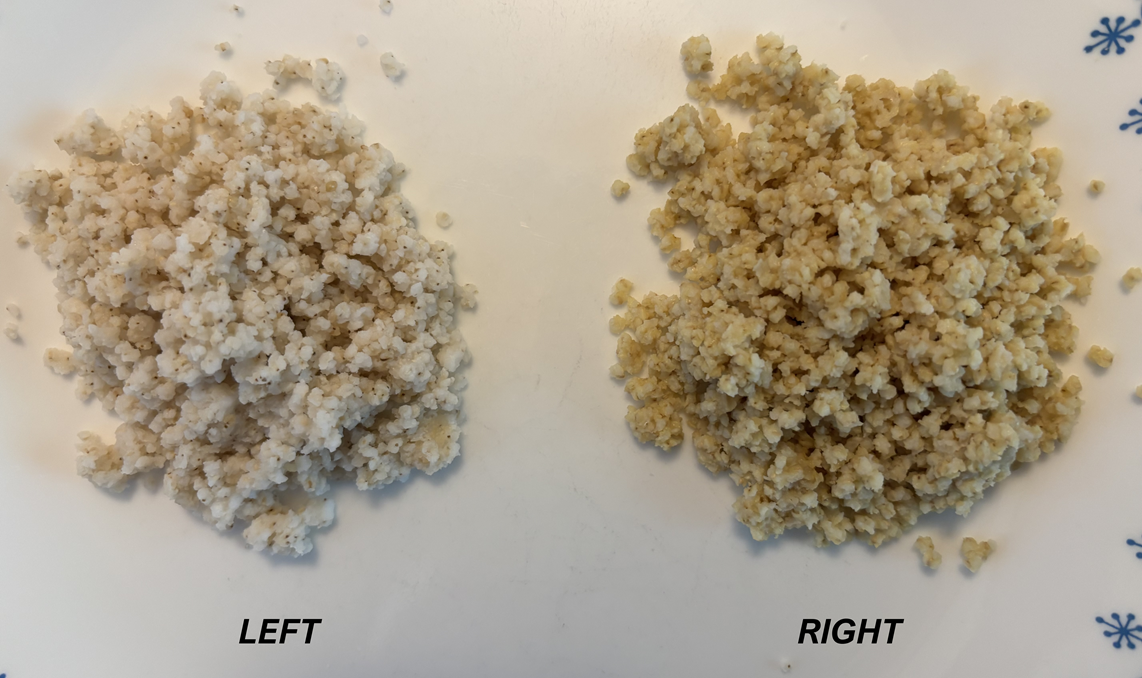
This is a hard one. Here are images of the grain of two millets, side by side. These are small (minor) millets, imported from India. What are they? The first image shows the hulled grains, uncooked. 2small-millets-uncooked-20pc.png <https://mail.google.com/mail/u/0?ui=2&ik=6356d3173c&attid=0.1&permmsgid=msg-a:r-1976289859277567924&view=att&disp=safe&realattid=f_mqd5j0jc0&zw> (998K) <https://mail.google.com/mail/u/0?ui=2&ik=6356d3173c&attid=0.1&permmsgid=msg-a:r-1976289859277567924&view=att&disp=safe&realattid=f_mqd5j0jc0&zw> The second image shows the cooked grains. 2small-millets-cooked-20pc.png <https://mail.google.com/mail/u/0?ui=2&ik=6356d3173c&attid=0.2&permmsgid=msg-a:r-1976289859277567924&view=att&disp=safe&realattid=f_mqd5pznz1&zw> (1,022K) <https://mail.google.com/mail/u/0?ui=2&ik=6356d3173c&attid=0.2&permmsgid=msg-a:r-1976289859277567924&view=att&disp=safe&realattid=f_mqd5pznz1&zw> These images are at 20%. They occupy the same left-right positions in both images. If anyone wants to look more closely I can send the full sized ones. I mentioned these two recently to Joni and Gary, but they have not seen the images yet. Nevertheless, if they want to respond, please allow a little time in case others have guesses. Later I'll offer some comments on my personal taste tests of the two. Don Don Osborn, PhD (East Lansing, MI, US) North American Millets Alliance
Here is another comparison related to the previously shown millets. First, however, I apologize for the links in the middle of the previous email that were the result of my attempt to move the images in-line wth the text. Please access the attachments and ignore the inline links. Attached is a composite image of the water in which each of these millets was soaked. It is my practice to rinse whole grains before cooking, and in the case of millets also to soak them for a period of time (usually overnight or morning to evening). I then dump that into a strainer and rinse again before the actual cooking. In the case of each of these two millets, I saved the soaking water since the difference was so striking. This might not help in identifying the millets, but still might be interesting. I've retained the same "left - right" tags for reference. DO, EL, MI, US NAMA On Sat, Jun 13, 2026 at 10:28 PM Don Osborn <don@milletsalliance.org> wrote:
This is a hard one. Here are images of the grain of two millets, side by side. These are small (minor) millets, imported from India. What are they?
The first image shows the hulled grains, uncooked.
The second image shows the cooked grains.
These images are at 20%. They occupy the same left-right positions in both images. If anyone wants to look more closely I can send the full sized ones.
I mentioned these two recently to Joni and Gary, but they have not seen the images yet. Nevertheless, if they want to respond, please allow a little time in case others have guesses.
Later I'll offer some comments on my personal taste tests of the two.
Don
Don Osborn, PhD (East Lansing, MI, US) North American Millets Alliance
The two millets are barnyard millet on the left, and browntop on the right. Attached is the same image of the uncooked grains that I shared earlier. (In that original email, the links were duds, but the attachments worked.) The barnyard millet (which being from India I assume is Echinochloa frumentacea, but might be E. esculenta) is from only my second purchase (this one under tha brand name Manna). My first use of it was only 2-3 years ago. The browntop was my first ever purchase (under the Danodia Organic label). I had never tried it before this year.- it's harder to find. Both have grains about the size of proso or kodo. They were cooked in a small rice cooker, with a water to grain proportion of about 2.5 : 1. Comparing the taste of barnyard and browntop, I found the former to have a pleasantly flat or bland taste, but a slight "earthy" aftertaste that I noticed in the olfactory sense. No bitterness or anything offputting. Definitely will try again, but will seek another brand, preferably organic. The browntop (Uruchloa or Brachiaria ramosa), on the other hand, had other subtle notes (such as rice, but not the same), and neither aftertaste nor bitterness. The latter seems significant in that one report on browntop's closest cultivated relative, Guinea millet (U./B. deflexa) was that people found the grain bitter. (One note regarding perception of bitterness in foods: my tastebuds may be unusual in that I like foods such as bitter melon and baobab leaf sauce.) It would be interesting to try both of these from domestic sources, although since varieties in this part of the world are not intended for harvest as food grains, I'm not sure what to expect in terms of size or characteristics of grains. Notes on names: 1. Barnyard millet is the catch-all term in international use for the 2 main cultivated Echinochloa spp.: E. esculenta (Japanese barnyard millet or in the US usually Japanese millet) and E. frumentacea (Indian barnyard millet, and in the US often, billion dollar grass). 2. Browntop millet is also called in the US, Dixie signalgrass. A variety of this that we recently discussed on this list is called Chiwapa millet. Don DO, EL, MI, US NAMA On Sun, Jun 14, 2026 at 9:25 AM Don Osborn <don@milletsalliance.org> wrote:
Here is another comparison related to the previously shown millets. First, however, I apologize for the links in the middle of the previous email that were the result of my attempt to move the images in-line wth the text. Please access the attachments and ignore the inline links.
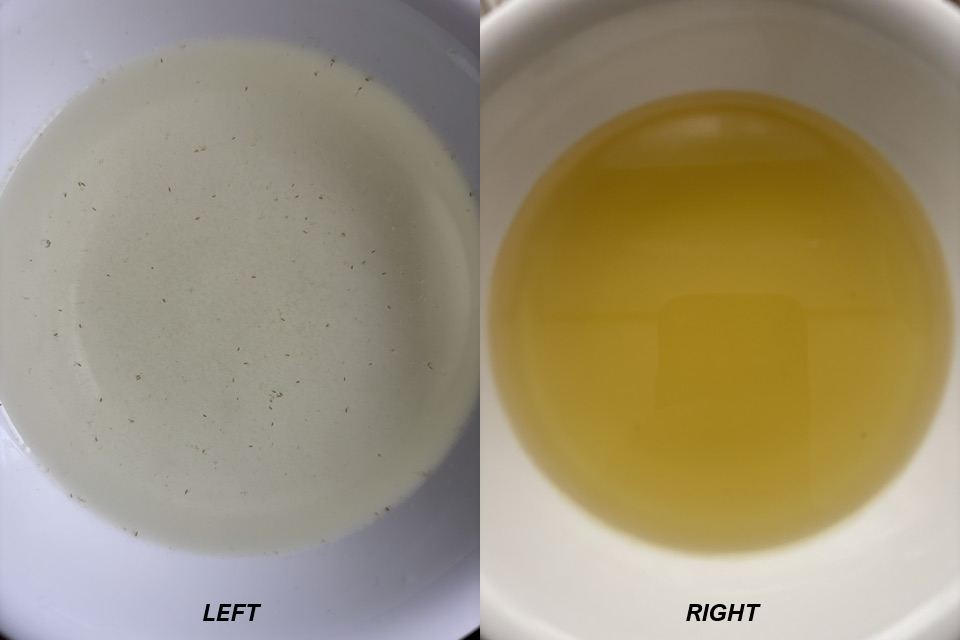
Attached is a composite image of the water in which each of these millets was soaked. It is my practice to rinse whole grains before cooking, and in the case of millets also to soak them for a period of time (usually overnight or morning to evening). I then dump that into a strainer and rinse again before the actual cooking.
In the case of each of these two millets, I saved the soaking water since the difference was so striking. This might not help in identifying the millets, but still might be interesting. I've retained the same "left - right" tags for reference.
DO, EL, MI, US NAMA
On Sat, Jun 13, 2026 at 10:28 PM Don Osborn <don@milletsalliance.org> wrote:
This is a hard one. Here are images of the grain of two millets, side by side. These are small (minor) millets, imported from India. What are they?
The first image shows the hulled grains, uncooked.
The second image shows the cooked grains.
These images are at 20%. They occupy the same left-right positions in both images. If anyone wants to look more closely I can send the full sized ones.
I mentioned these two recently to Joni and Gary, but they have not seen the images yet. Nevertheless, if they want to respond, please allow a little time in case others have guesses.
Later I'll offer some comments on my personal taste tests of the two.
Don
Don Osborn, PhD (East Lansing, MI, US) North American Millets Alliance
PS- Offlist, Gary guessed browntop correctly. PPS- I would not use the adjective "nutty" to describe the taste of either barnyard or browntop. DO, EL, MI, US NAMA On Fri, Jun 19, 2026 at 12:12 PM Don Osborn <don@milletsalliance.org> wrote:
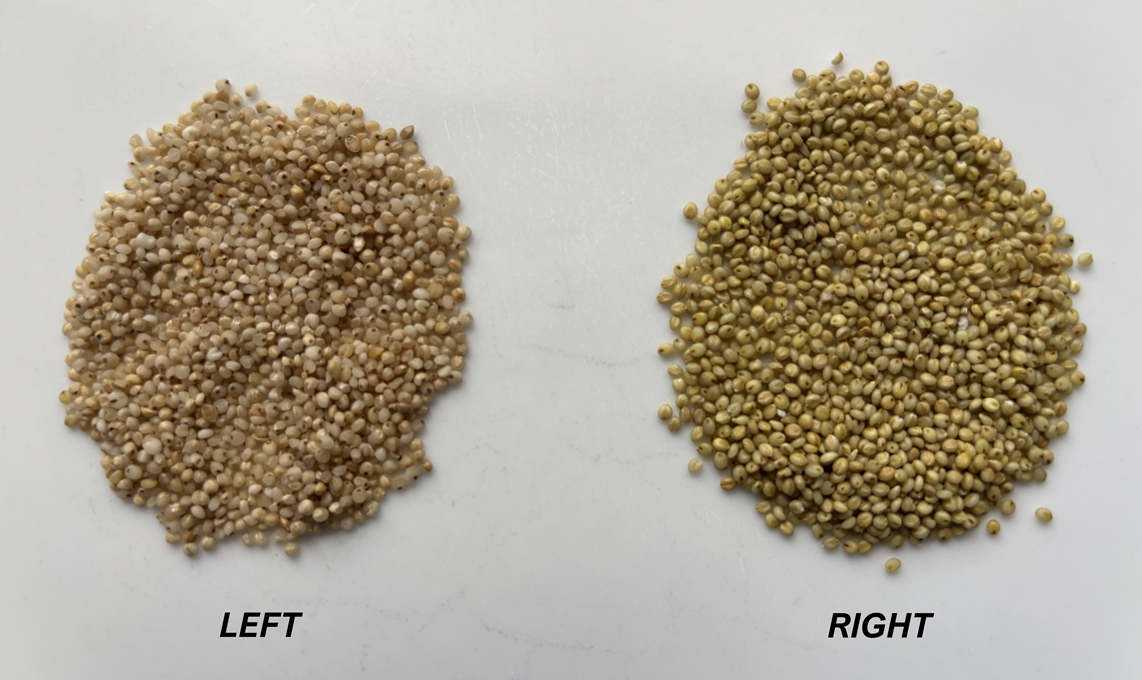
The two millets are barnyard millet on the left, and browntop on the right. Attached is the same image of the uncooked grains that I shared earlier. (In that original email, the links were duds, but the attachments worked.)
The barnyard millet (which being from India I assume is Echinochloa frumentacea, but might be E. esculenta) is from only my second purchase (this one under tha brand name Manna). My first use of it was only 2-3 years ago.
The browntop was my first ever purchase (under the Danodia Organic label). I had never tried it before this year.- it's harder to find.
Both have grains about the size of proso or kodo. They were cooked in a small rice cooker, with a water to grain proportion of about 2.5 : 1.
Comparing the taste of barnyard and browntop, I found the former to have a pleasantly flat or bland taste, but a slight "earthy" aftertaste that I noticed in the olfactory sense. No bitterness or anything offputting. Definitely will try again, but will seek another brand, preferably organic.
The browntop (Uruchloa or Brachiaria ramosa), on the other hand, had other subtle notes (such as rice, but not the same), and neither aftertaste nor bitterness. The latter seems significant in that one report on browntop's closest cultivated relative, Guinea millet (U./B. deflexa) was that people found the grain bitter.
(One note regarding perception of bitterness in foods: my tastebuds may be unusual in that I like foods such as bitter melon and baobab leaf sauce.)
It would be interesting to try both of these from domestic sources, although since varieties in this part of the world are not intended for harvest as food grains, I'm not sure what to expect in terms of size or characteristics of grains.
Notes on names: 1. Barnyard millet is the catch-all term in international use for the 2 main cultivated Echinochloa spp.: E. esculenta (Japanese barnyard millet or in the US usually Japanese millet) and E. frumentacea (Indian barnyard millet, and in the US often, billion dollar grass). 2. Browntop millet is also called in the US, Dixie signalgrass. A variety of this that we recently discussed on this list is called Chiwapa millet.
Don
DO, EL, MI, US NAMA
On Sun, Jun 14, 2026 at 9:25 AM Don Osborn <don@milletsalliance.org> wrote:
Here is another comparison related to the previously shown millets. First, however, I apologize for the links in the middle of the previous email that were the result of my attempt to move the images in-line wth the text. Please access the attachments and ignore the inline links.
Attached is a composite image of the water in which each of these millets was soaked. It is my practice to rinse whole grains before cooking, and in the case of millets also to soak them for a period of time (usually overnight or morning to evening). I then dump that into a strainer and rinse again before the actual cooking.
In the case of each of these two millets, I saved the soaking water since the difference was so striking. This might not help in identifying the millets, but still might be interesting. I've retained the same "left - right" tags for reference.
DO, EL, MI, US NAMA
On Sat, Jun 13, 2026 at 10:28 PM Don Osborn <don@milletsalliance.org> wrote:
This is a hard one. Here are images of the grain of two millets, side by side. These are small (minor) millets, imported from India. What are they?
The first image shows the hulled grains, uncooked.
The second image shows the cooked grains.
These images are at 20%. They occupy the same left-right positions in both images. If anyone wants to look more closely I can send the full sized ones.
I mentioned these two recently to Joni and Gary, but they have not seen the images yet. Nevertheless, if they want to respond, please allow a little time in case others have guesses.
Later I'll offer some comments on my personal taste tests of the two.
Don
Don Osborn, PhD (East Lansing, MI, US) North American Millets Alliance
participants (1)
-
 Don Osborn